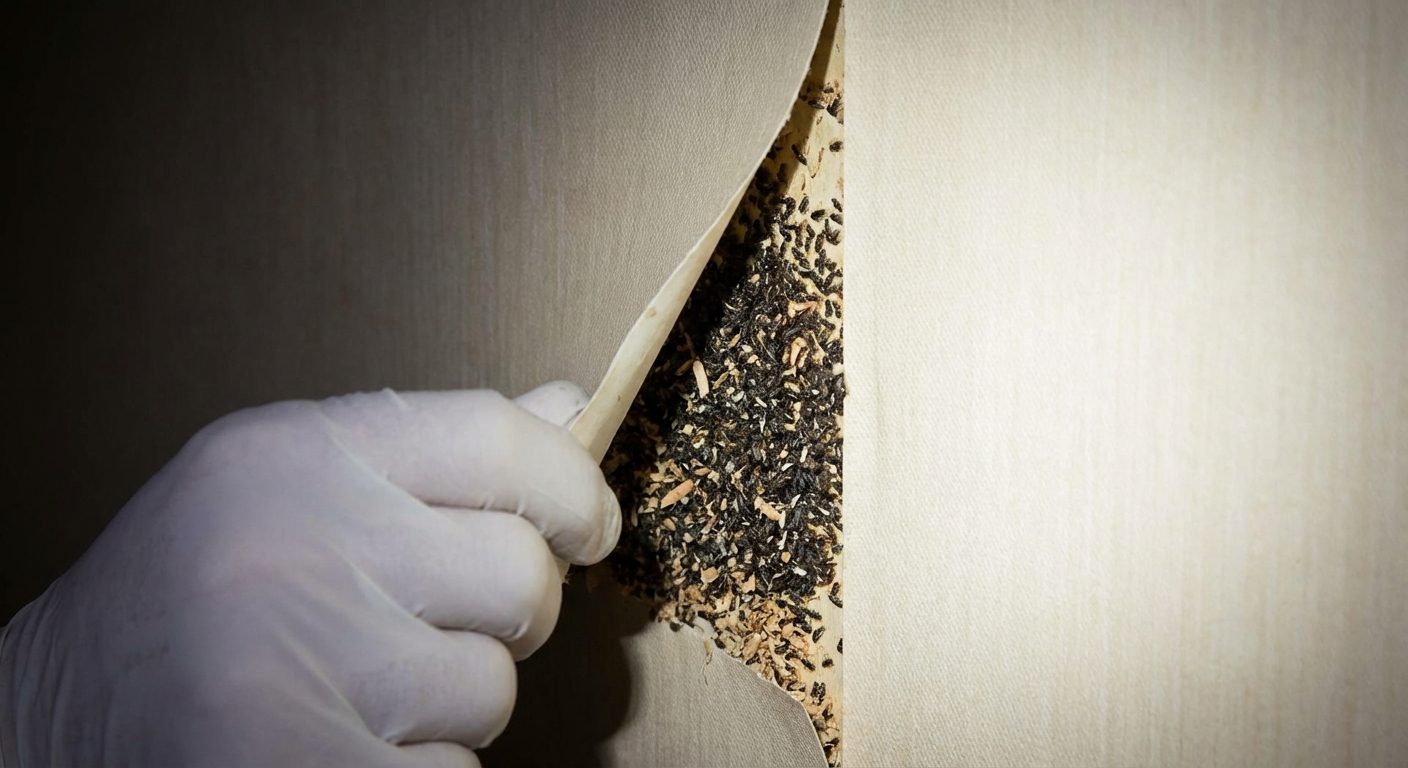
The Silent Invasion Nobody Sees Coming
You walk into your kitchen on an ordinary Tuesday morning. Everything looks fine. Your pantry is organized, your counters are clean, your home smells fresh. Then, three weeks later, you notice something moving in the corner of your eye. By that point, the infestation has already spread to places you haven't even checked yet.
This is how most pest infestations begin—not with a dramatic discovery, but with complete invisibility.
Why Your Home Gave No Warning Signs
The most unsettling truth about pest infestations is that they don't announce themselves. Unlike a leaky pipe or a broken window, pests operate in the shadows, literally and figuratively.
The first invaders are scouts. A single pest—a cockroach, a bed bug, a mouse—enters your home through the tiniest crack. It's so small you'd never notice it. This scout isn't here to cause chaos; it's here to assess whether your home is worth colonizing. Food sources, shelter, water access—it's checking boxes on an invisible checklist.
The population explosion happens in hidden spaces. Once the scout reports back (through pheromones or simply by surviving), more follow. They don't settle in your living room where you'd see them. They nest behind walls, under floorboards, in the dark corners of your basement, inside your walls where temperatures are stable and predators can't reach them.
By the time you spot the first visible pest, there are already dozens—or hundreds—you haven't seen.
The Deceptive Timeline
This is what makes pest infestations so psychologically disturbing: there's a massive gap between when they start and when you realize it.
- Week 1-2: Initial colonization. Nothing visible. No signs whatsoever.
- Week 3-4: Population begins to double. Still nothing you'd notice unless you're specifically looking.
- Week 5-6: The infestation reaches critical mass. Suddenly, you see one. Then another. Then you're wondering how long this has actually been happening.
Homeowners often say, "We had no warning." But the warning was always there—you just couldn't see it.
The Invisible Indicators You're Missing
Here's what's happening right now in homes across the country: pest infestations are thriving in the spaces between your awareness.
Droppings in hidden areas. Rodent droppings the size of a grain of rice, left in the walls where you'll never look. Cockroach feces that look like pepper specks, scattered behind appliances.
Structural damage you can't access. Termites eating through wooden beams in your crawl space. Carpenter ants hollowing out the interior of your walls. By the time structural damage becomes visible, months or years have passed.
Odors that seem normal. A faint, musty smell in one room. You assume it's just old air. You open a window. The smell persists, but you've stopped noticing it. That's not normal air—that's the scent of a thriving pest colony.
Sounds at night. Scratching in the walls. Tiny footsteps in the attic. Most people dismiss these as settling pipes or the house "settling." They're not.
Why Early Detection Feels Impossible
The cruel irony is that the moment when pest infestations are easiest to eliminate—those first few weeks—is precisely when you have zero way of knowing they're there.
Professional pest control companies know this. They don't wait for homeowners to call them because they see a bug. They recommend regular inspections before you see anything, because by the time the infestation is visible, it's exponentially harder and more expensive to treat.
The Cost of Not Knowing
What starts as a minor pest problem—if caught early—can become catastrophic if left unchecked.
A single pair of mice can produce 500+ offspring in a year. A cockroach colony can number in the thousands within months. Termites can cause structural damage worth thousands of dollars, and most homeowner's insurance doesn't cover it.
The financial cost is real. But there's also a psychological cost: the violation of discovering that your home—your sanctuary—has been colonized without your knowledge. That something has been living in your walls, eating your food, contaminating your space, and you were completely oblivious.
What You Should Do Right Now
The fact that you can't see an infestation doesn't mean it isn't happening. This is why professionals recommend:
Schedule a professional inspection. Not when you see pests, but before you do. Early detection can save thousands in treatment and repair costs.
Check the hidden places yourself. Behind refrigerators, under sinks, in crawl spaces, attics, and basements. Look for droppings, damage, or unusual odors.
Seal entry points. Cracks, gaps around pipes, holes in screens—these are highways for pests. Sealing them is one of the few preventative measures that actually works.
Don't assume cleanliness equals safety. A spotless home can still harbor an infestation. Pests aren't attracted only to dirty homes; they're attracted to homes that provide shelter and food, regardless of how clean they appear.
The Uncomfortable Truth
The scariest part about pest infestations isn't the pests themselves—it's the realization that something could be happening in your home right now, and you'd have no way of knowing.
Your home could be perfectly clean. Your kitchen could be spotless. Your family could be healthy. And somewhere behind your walls, in the darkness where you can't see, a colony could be thriving.
The warning signs aren't missing. They were always there. You just couldn't see them.